頻率同步和訊號擷取
When using an acoustic camera, its PRPD detection frequency must first be set to match that of the equipment under test.
The equipment being tested is typically in operation within the power grid, and its fundamental frequencies are predominantly 60 Hz, 50 Hz, or 16.7 Hz (railway systems).
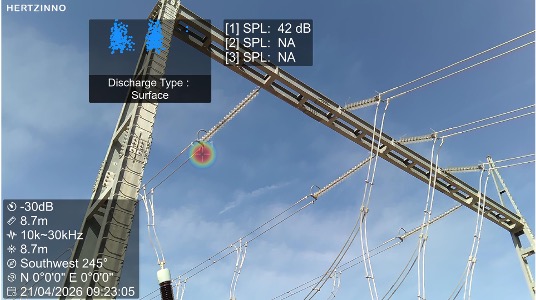
聲學攝影機偵測超音波強度的空間分佈,並繪製隨時間和頻率變化的聲學強度訊號。中心相位估計採用圓均值、馮·米塞斯分佈、相位直方圖等方法。同時,使用最大似然估計來建立PRPD模式,以獲得能量分佈的機率模型,產生可用於後續分類或閾值化的最大對數似然值。
數學方法:最大似然階段對準
假設已收集到一組局部放電脈衝:
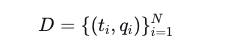
其中:a3b09b06f625480793d2b54f5106 7ffb在實務上,採用對數來避免數值下溢:
If the power frequency is (e.g., 50 Hz), the phase corresponding to each pulse can be written as:
The key unknown quantity here Δϕ is , i.e., the phase offset.
Consider a certain class of PRPD patterns as a probability distribution , , which represents the probability of a PD pulse occurring near phase and amplitude . Given a specific phase offset Δϕ , the joint probability of all observed pulses is:

最大似然估計尋求最大化此對數似然:a3b09b06 f625480793d2b54f51067ffb直觀了解

PRPD圖案沿著相位軸連續循環移位。使電流脈衝與參考分佈最佳匹配的位移角被視為最佳相位對準。

局部放電模式的機率建模s
von Mises的相位分佈Mixture
雜訊分離與清潔能源圖
透過將現場資料與PRPD的二維機率直方圖結合,可以獲得標準的能量分佈圖,有效濾除脈衝噪聲,並為測量提供乾淨的分佈概率point:
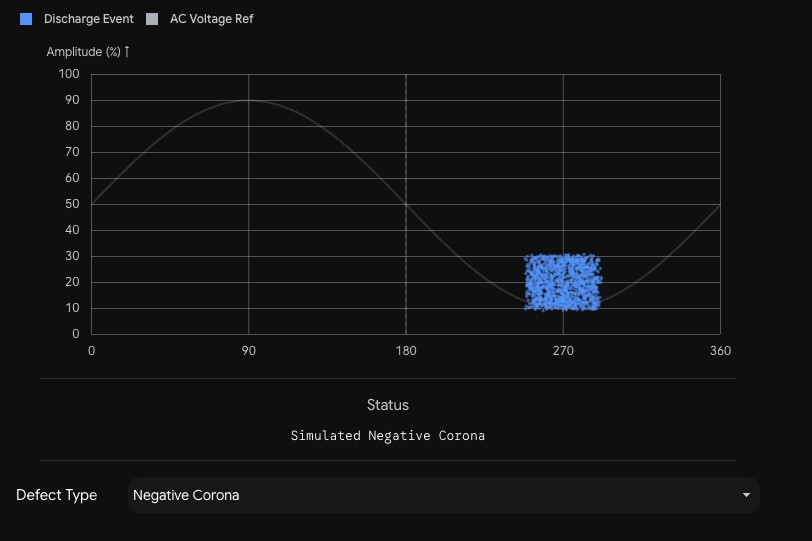
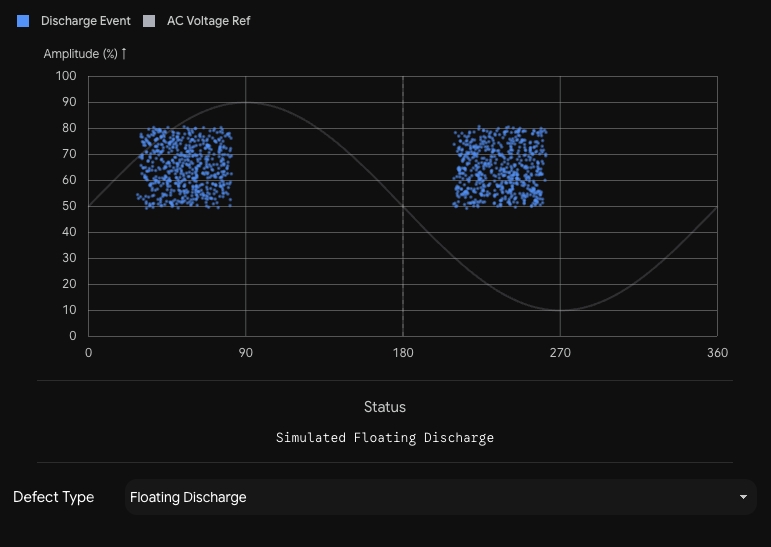
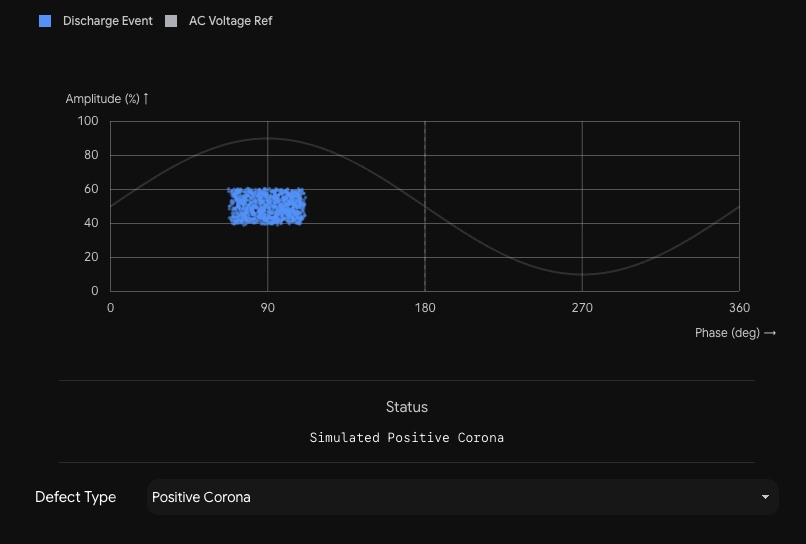
Common types of partial discharge include positive corona, negative corona, surface discharge, and floating discharge. Their discharge characteristics are well defined and typically concentrated around two phase regions, conforming to the von Mises distribution—that is, their discharge models follow a normal distribution on a circular variable.
Hence, the phase distribution can be expressed as:

在進一步的信號處理中,引入了利用先驗信息的貝葉斯估計方法來減少系統偏差。 PRPD辨識演算法因此成為測量過程中的機率估計問題。
這個方法依賴一個核心公式:貝葉斯定理。

where:
Bayesian Estimation and Defect Classification
Prior Distribution
P(μ)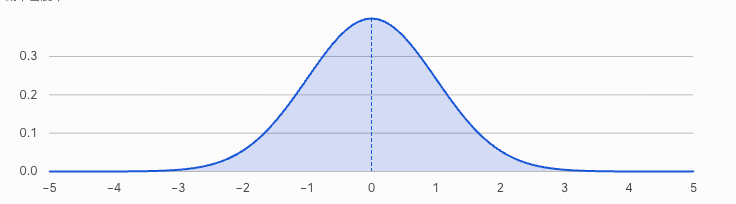
D代表觀察到的data.
Bayesian estimation is a statistical inference method. Its core concept is not to find a single fixed parameter value, but to treat the parameter to be estimated as a random variable, using a probability distribution to describe the knowledge about that parameter.
為何正負電暈無法分離d
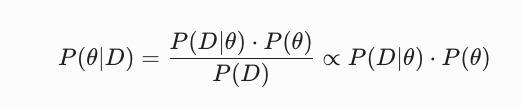
 represents the parameter to be estimated (e.g., the average height of a population).
需要注意的是,雖然可以物理區分正負電暈,但聲學相機缺乏電壓極性參考,無法確定絕對電壓過零。因此,在實際的辨識演算法中,正負電暈被統一為一個「電暈放電」類別。這正是聲學相機無法區分正電暈和負電暈的原因。儘管如此,即使進行這種合併,聲學攝影機仍然可以為電暈型放電的整體檢測提供高置信度的結果。
P() is the Prior Distribution: The initial probability assessment of the parameter before observing any data.
 is the Likelihood Function: The probability of observing the data D given the parameter . It describes how much the data supports different parameter values.
P(|D) is the Posterior Distribution: The updated probability assessment of the parameter after combining the prior knowledge with the new observational data. This is the final output of Bayesian estimation.
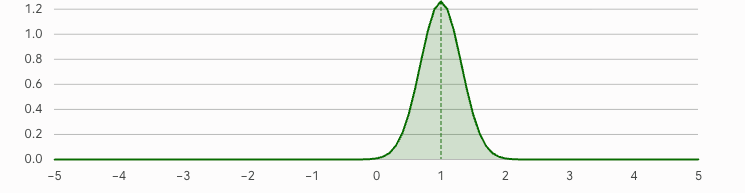
Here is the estimation visualization for a cse like observed mean as 1, prior mean as 1.4, Prior Std Dev as 1, and with a 10 samples size. 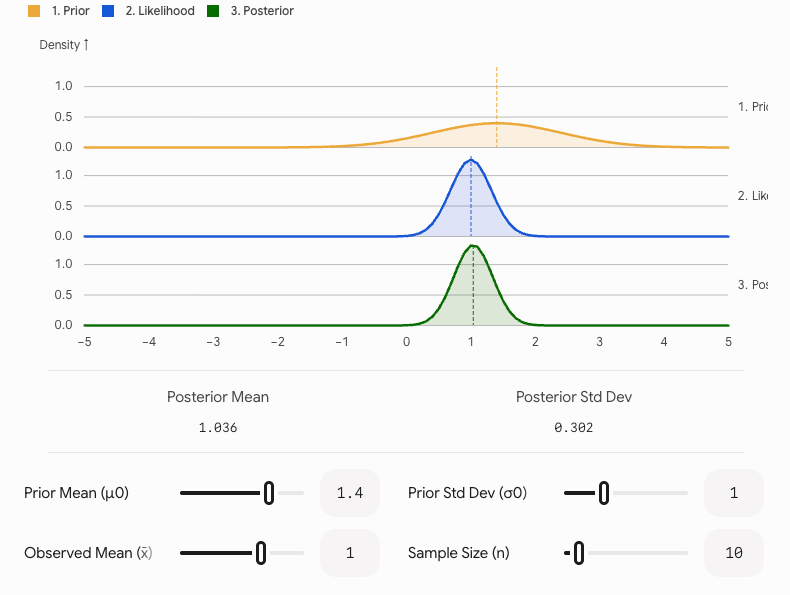
Here is the estimation visualization for a cse like observed mean as 1, prior mean as 1.4, Prior Std Dev as 1, and with a 80 samples size. 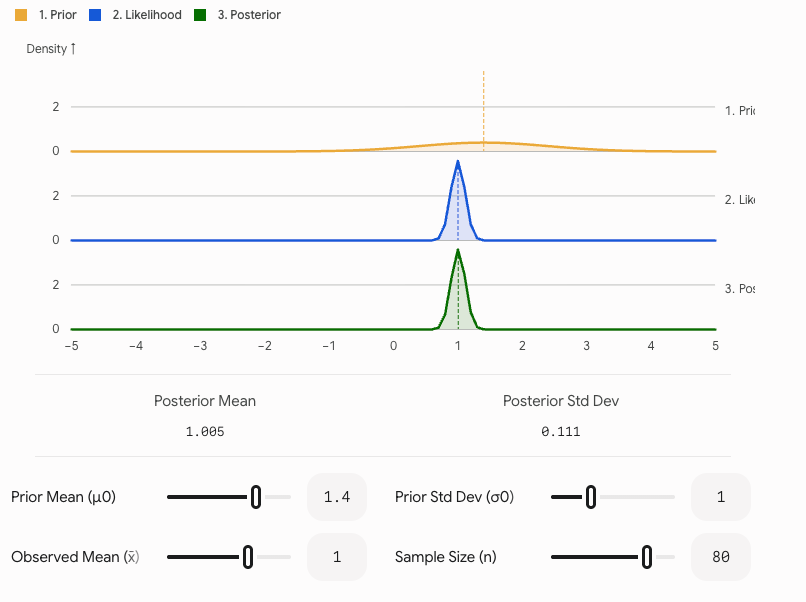
With sample numbers increase the ratio of currenction will be increased. so a circle, the camera gathering more than 50 times, so it can recognize the PRPD with a high accurrancy.
The algorithm assumes four defect categories: corona discharge, surface discharge, floating discharge, and noise (particle discharge). Each category has its own PRPD distribution, so a standard probability distribution can be used as the likelihood function for modeling, and the final detection result is obtained through Bayesian estimation.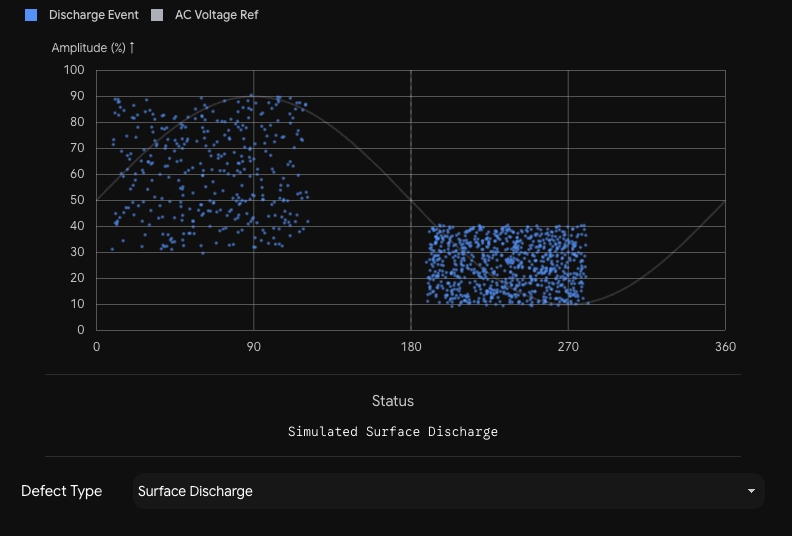
基於人工智慧的穩健對準和異常識別
保留「不確定」狀態a3b09b06f62548 0793d2b54f51067ffb相位恢復的自我監督學習
在訓練階段,採用自我監督學習策略自動建構大規模樣本:人工隨機循環移位(例如,,,,)應用於PRPD 模式,模型的任務是預測此偏移量。這提供了豐富的訓練數據,無需手動標記,使模型能夠學習從擾動中恢復真實相位。
To further enhance system robustness in complex field environments, artificial intelligence is introduced to handle challenges such as noise interference, multi-source discharge superposition, sensor variability, and unstable phase references. The AI model can directly output the phase offset Δϕ , a confidence score, the defect category, and an indication of whether multi-source superposition is present.
可微相移層
The system retains an “uncertain” state: when the PRPD pattern is too sparse, the noise level is excessively high, the defect type is unknown, or multi-source superposition is evident, the model does not force an alignment. Instead, it returns a low confidence or rejects the judgment, thereby avoiding misclassification.
在模型架構方面,可微相移層(類似於循環移位結構)可以嵌入,使網路相位向傳播到相位端相匹配,從而自動在正面對像端對齊,從而可以實現相位端匹配到最佳的相位端。
相位不變分類
當目標只是識別缺陷類型而不是恢復絕對相位時,可以採用相位不變分類策略。在資料增強期間,PRPD 圖案隨機旋轉,迫使模型學習獨立於絕對相位位置的「形狀特徵」。這產生了對相位旋轉不敏感的分類器,即使沒有精確對準也能夠準確地區分缺陷類型。
In terms of model architecture, a differentiable phase shift layer (analogous to a circular shift structure in a spatial transformer network) can be embedded, allowing the network to automatically search for the optimal phase translation during forward propagation so that the input pattern best matches the internal reference template, thereby achieving end-to-end phase alignment.
Phase-Invariant Classification
When the objective is only to identify the defect type and not to recover the absolute phase, a phase-invariant classification strategy can be employed. During data augmentation, the PRPD patterns are randomly rotated, forcing the model to learn “shape features” that are independent of absolute phase position. This yields a classifier insensitive to phase rotation, capable of accurately distinguishing defect types even without precise alignment.


