局部放電(PD)是高壓設備絕緣缺陷最重要的指標之一。在各種局部放電分析方法中,相位分辨局部放電模式(通常稱為 PRPD)得到了廣泛應用,因為它提供了放電脈衝在工頻電壓週期內如何分佈的清晰統計視圖。
PRPD 模式通常代表三個關鍵參數:
By透過分析 PRPD 圖案的相位放電、幅度分佈、脈衝絕緣密度和對稱性,例如電暈可能的電暈和電暈表面電光。
本文介紹了這三種常見放電類型的典型 PRPD 特性。
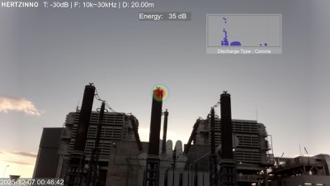
電暈放電通常發生在曲率半徑較小的電極周圍的氣體絕緣中,例如尖點、毛刺、邊緣或突出物。由於電暈放電受極性的影響很大,因此正電暈和負電暈的 PRPD 模式通常有很大不同。
正電暈放電通常與所施加交流電的正半週期相關電壓。
In a PRPD pattern, positive corona pulses are often concentrated near the peak region of the positive half-cycle. Under typical AC test conditions, this may appear around 70° to 110°, although the exact phase range can vary depending on the electrode geometry, voltage level, sensor type, and test setup.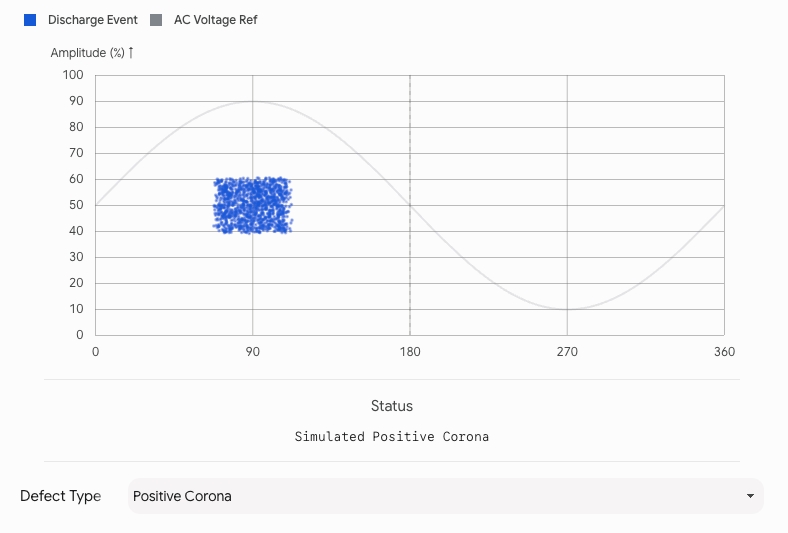
正電暈的振幅分佈通常較穩定且集中。在 PRPD 圖案上,它可能顯示為密集的水平帶或緊湊的點簇。隨著施加電壓的增加,相位間隔可能會變得稍寬,同時脈衝重複率增加。但與其他類型的絕緣缺陷相比,幅度可能不會顯著增加。
正電暈的典型特徵包括:
高脈衝重複率54b805d714ef491e93 28f3678dd09be6單脈衝幅度相對較小
On a PRPD pattern, negative corona pulses are commonly concentrated near the peak region of the negative half-cycle, often around 250° to 290° under typical conditions.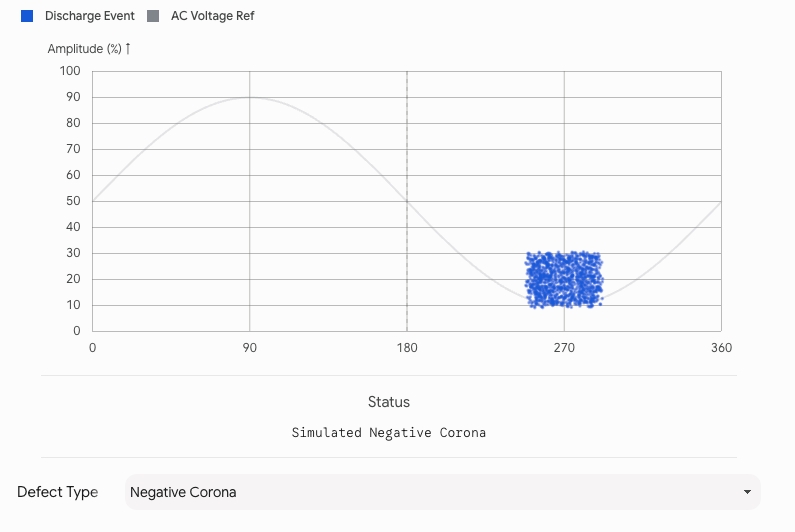
PRPD上密集的低幅度簇模式5 4b805d714ef491e9328f3678dd09be6強極性依賴性
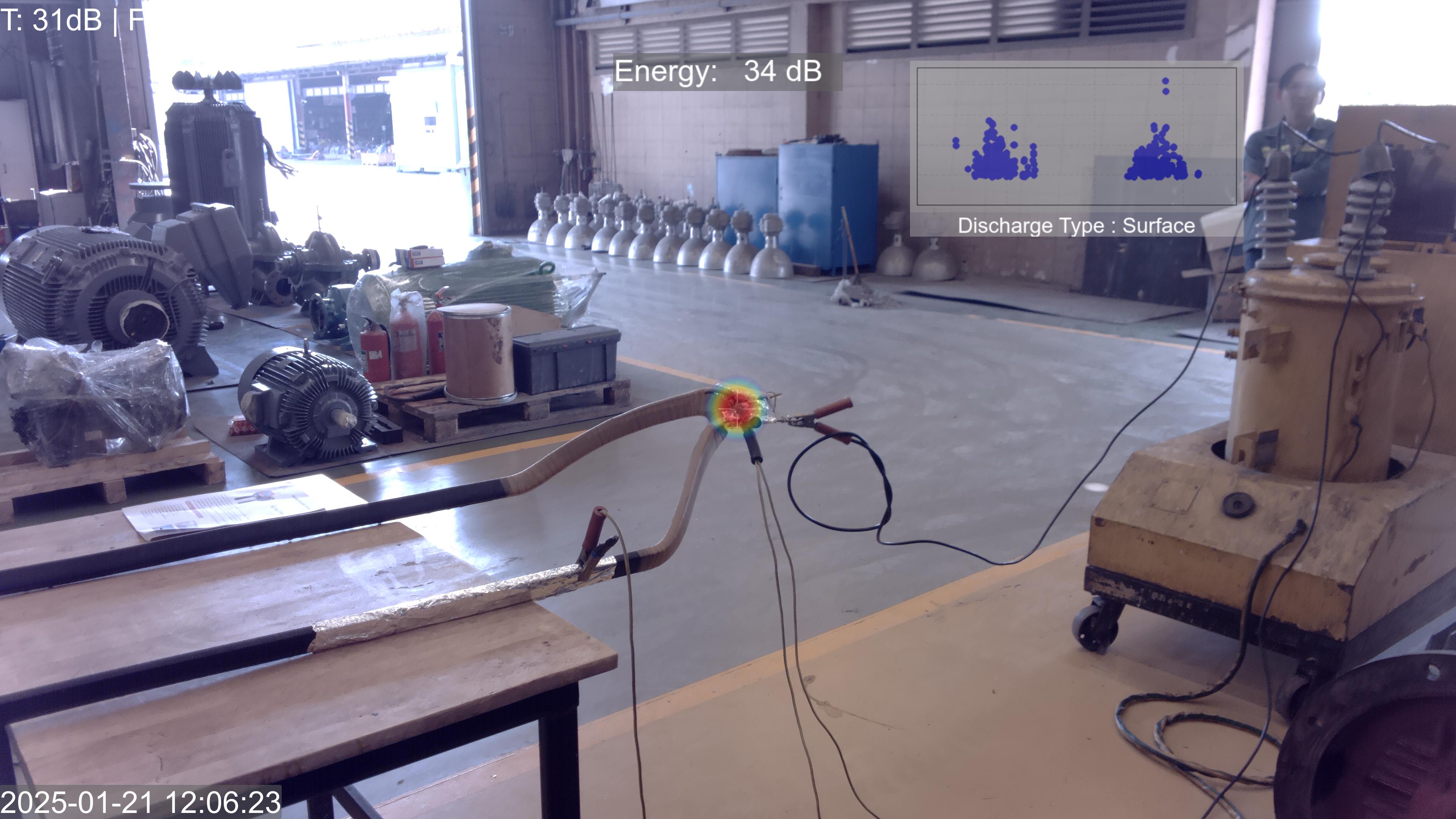
2。表面放電 PRPD 模式
兩個半週期之間存在明顯的不對稱性
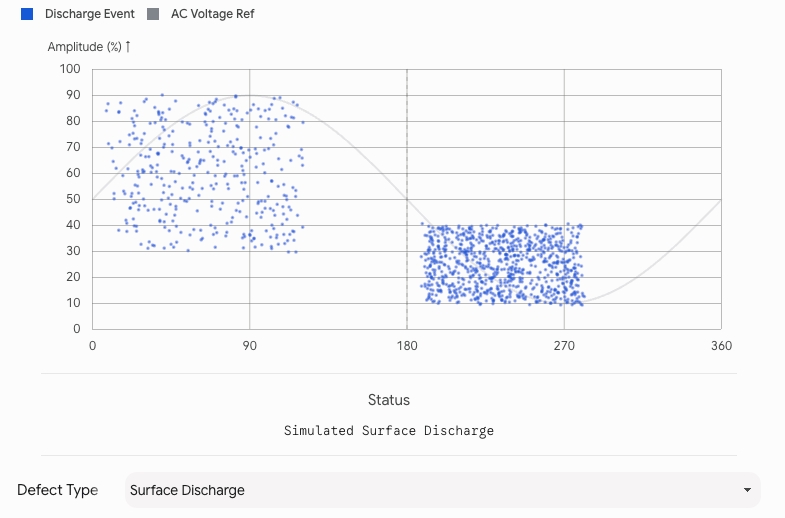
Unlike corona discharge, surface discharge usually appears in both positive and negative half-cycles. It is commonly observed on the rising edges and peak regions of the applied voltage waveform. Typical phase regions may include 10° to 90° in the positive half-cycle and 190° to 270° in the negative half-cycle.
一個半週期內幅度色散較寬
9602852805282805 e6楔形或兔耳狀PRPD輪廓
與表面污染、濕度或跟踪有很強的關係
表面放放電擊變電擊、導致絕緣電擊
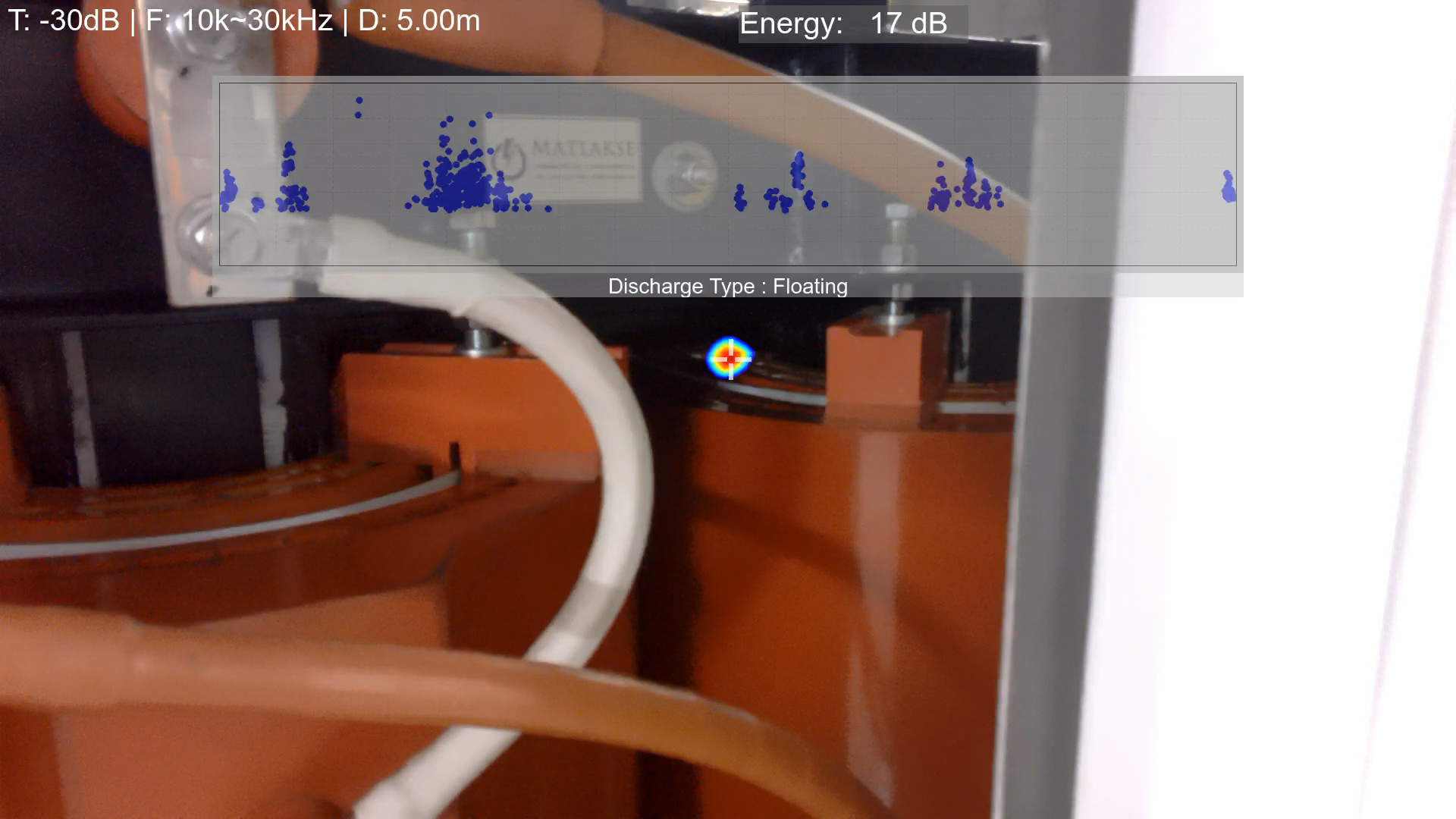
正負放電半週期54b8 05d714ef491e9328f3678dd09be6兩個半週期之間高度對稱
兩側相寬和脈衝密度相似54b805d714ef491e932 8f3678dd09be6可能與鬆動或未接地的金屬組件有關
因為浮動電位放電通常與機械缺陷或電氣連接不良有關,它可能是GIS、開關設備、變壓器和其他高壓設備中的重要警訊。
In a PRPD pattern, floating potential discharge is usually concentrated shortly after the zero-crossing points of the voltage waveform. Typical discharge phase regions may appear around 30° to 80° and 210° to 260°.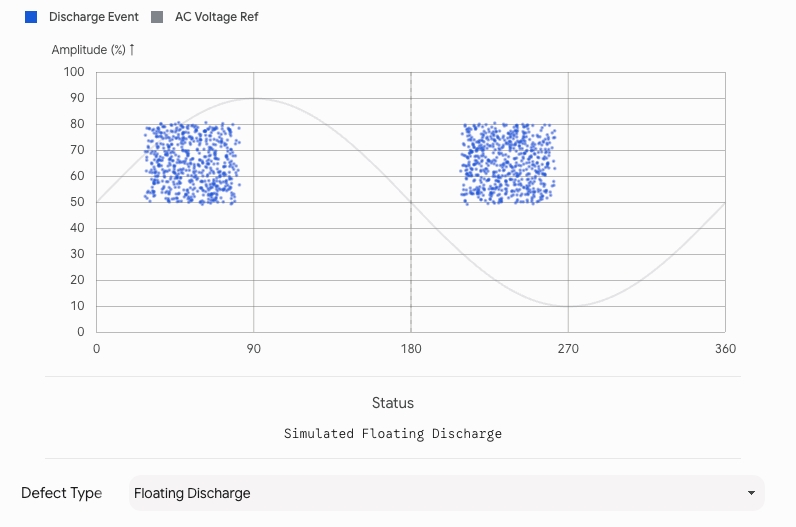
典型 PRPD 特徵的比較
雖然 PRPD 分析是一種強大的診斷方法,但它不應該作為確定絕緣缺陷的唯一依據。
在實際現場應用中,PRPD模式會受到多種因素的影響,包括:
多次同時放電來源
| Discharge Type | Typical Source | Phase Characteristics | Amplitude and Density | PRPD Appearance |
|---|---|---|---|---|
| Positive Corona | Sharp points, burrs, small-radius electrodes | Mainly near the positive voltage peak | Stable amplitude, concentrated distribution | Compact cluster or horizontal band |
| Negative Corona | Sharp electrodes in gas insulation | Mainly near the negative voltage peak | High repetition rate, lower pulse amplitude | Dense low-amplitude cluster |
| Surface Discharge | Solid-gas or solid-liquid insulation interface | Appears in both half-cycles, often asymmetric | One half-cycle may have higher amplitude; the other may have higher density | Wedge-shaped or rabbit-ear-like pattern |
| Floating Potential Discharge | Ungrounded or poorly connected metal parts | Appears in both half-cycles, often after zero-crossing | Stable amplitude and similar pulse density in both half-cycles | Two symmetrical dense clusters |
因此,可靠的局部診斷應將PRPD分析與其他資訊結合起來,例如時域脈衝波形、頻譜、PRPS趨勢、多感測器比較、聲學或UHF定位以及設備運作情況
結論
For example, the same defect may show different amplitude characteristics when measured by IEC 60270 electrical methods, HFCT sensors, UHF sensors, TEV sensors, or ultrasonic sensors. In addition, external noise may produce phase-related or random patterns that resemble partial discharge.
Therefore, reliable PD diagnosis should combine PRPD analysis with other information, such as time-domain pulse waveform, frequency spectrum, PRPS trend, multi-sensor comparison, acoustic or UHF localization, and equipment operating conditions.
PRPD pattern analysis provides valuable insight into the behavior of partial discharge within a power frequency voltage cycle. Different insulation defects tend to produce different phase, amplitude, and pulse density characteristics.
Corona discharge usually shows strong polarity dependence. Positive corona is commonly concentrated near the positive voltage peak, while negative corona is often concentrated near the negative voltage peak with high pulse repetition.
Surface discharge typically appears in both half-cycles and often shows significant asymmetry, which may indicate contamination, moisture, or surface insulation degradation.
Floating potential discharge usually produces two relatively symmetrical discharge clusters in the positive and negative half-cycles, often related to ungrounded or poorly connected metal components.
By understanding these typical PRPD characteristics, engineers can better identify insulation defects, evaluate equipment condition, and take preventive maintenance actions before serious failures occur.
However, PRPD interpretation should always be combined with field experience, measurement conditions, and additional diagnostic data to achieve accurate and reliable results.


